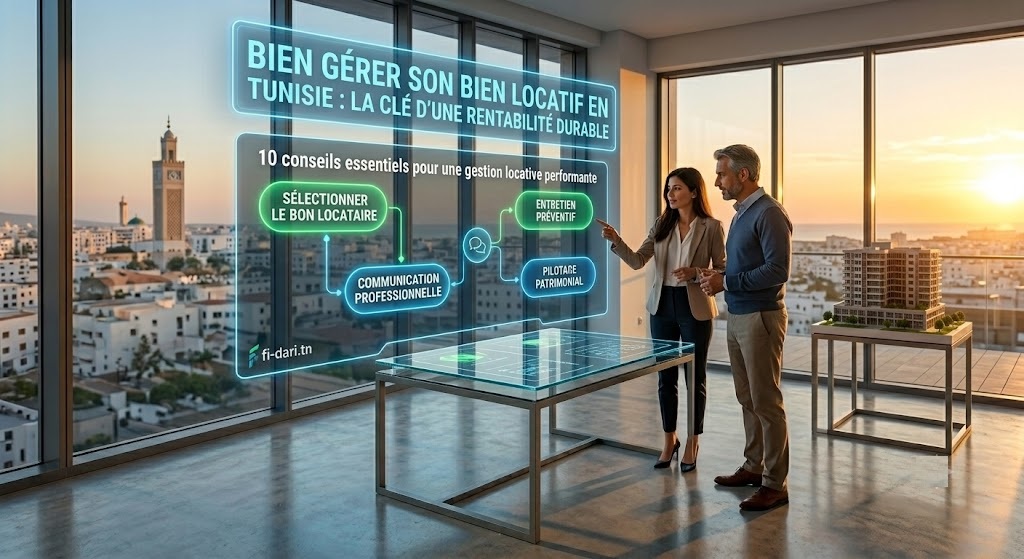
A profitable rental property isn't just one that's well purchased—it's one that's well managed. Discover 10 essential tips from Fi-Dari.tn to maximize your rental returns.
Why Property Management Is a Direct Profitability Driver
In reality, many landlords lose profitability not when they buy the property, but in the months that follow. Poorly priced rent, choosing the wrong tenant, late payments, postponed maintenance, and inadequate documentation can all reduce investment performance.
Rental property management is often seen as an administrative burden. In fact, it is one of the most powerful drivers of long-term profitability. Effective management improves occupancy rates, protects your property, strengthens tenant relationships, and minimizes unexpected costs.
Successful rental management is built on four pillars:
- The right selection: Choose the right tenant from the start.
- The right relationship: Formalize agreements, communicate clearly, and follow up consistently.
- The right maintenance: Prevent issues instead of dealing with costly repairs later.
- The right monitoring: Track your property's overall financial performance.
10 Tips for Successful Rental Property Management
1. Choose the Right Tenant
Tenant selection is the single most important factor affecting rental performance. A property rented to a financially reliable and stable tenant is far more valuable than one rented at a higher price to a high-risk tenant. Take the time to verify documents and carefully assess each application.
2. Clearly Formalize the Rental Agreement
A well-drafted lease protects both landlord and tenant. It should clearly define the rent amount, payment terms, lease duration, responsibilities, and service charges. Always complete the process with a detailed move-in inspection report.
3. Prepare the Property Before Move-In
A clean, well-maintained, and move-in-ready property creates a professional first impression and sets the tone for a positive landlord-tenant relationship.
4. Monitor Rent Payments Consistently
Rent collection should be organized, documented, and monitored regularly. Follow up promptly on late payments and avoid allowing bad payment habits to develop.
5. Price the Rent According to the Market
A few weeks of vacancy can easily offset the benefit of charging an inflated rent. Setting a realistic rental price helps secure reliable tenants more quickly and ensures stable occupancy.
6. Prevent Problems Instead of Reacting to Them
A leaking faucet, aging paint, or a faulty air-conditioning system will almost always cost more if repairs are delayed. Preventive maintenance protects both your property and your rental income while keeping tenants satisfied.
7. Think Like an Investor
Track rental income, expenses, vacancy periods, maintenance costs, and annual performance. Monitoring these key indicators helps determine whether your investment is truly delivering the expected returns.
8. Invest in High-Impact Improvements
Fresh paint, modern lighting, renovated bathrooms, and upgraded kitchens often generate a better return on investment than expensive renovations with limited visible impact.
9. Communicate Professionally
Tenants are more likely to stay in a property where communication is clear, requests are handled promptly, and commitments are respected. Professional communication reduces conflicts and increases tenant retention.
10. Delegate as Your Portfolio Grows
Managing multiple rental properties requires a higher level of organization. The real question is not "How much does property management cost?" but "How much is poor property management costing me?"
Self-Management or Professional Property Management?
Self-Management
- Suitable for available and organized property owners.
- Ideal for small rental portfolios.
- Appropriate when the property is nearby and easy to supervise.
- Requires time, discipline, and consistent involvement.
Professional Property Management
- Ideal for owners with limited time.
- Recommended for Tunisians living abroad (TRE) or owners living far from their property.
- Provides professional oversight while reducing administrative burdens.
- Can transform an average rental property into a high-performing investment asset.
At Fi-Dari Loc, we believe in a simple principle: better property management means better protection for your income, your time, and your investment. In today's increasingly demanding real estate market, effective management is no longer an option—it is a decisive competitive advantage.